Soft tissue injuries are among the most common injuries encountered in sport, the workplace, and everyday life. Whether caused by a sudden twist, overexertion, or an awkward fall, strains and sprains can result in pain, swelling, and reduced mobility. Knowing how to recognise and manage these injuries can help speed recovery and prevent further damage.
At Responder Training, our first aid courses teach practical skills to confidently respond to a range of injuries, including soft tissue injuries.
What Are Soft Tissue Injuries?
Soft tissue injuries affect muscles, tendons, and ligaments. The two most common types are strains and sprains.
What is a Strain?
A strain occurs when a muscle or tendon is overstretched or torn. Strains commonly affect the back, hamstrings, calves, and shoulders.
Common symptoms include:
- Pain and tenderness
- Muscle weakness
- Swelling
- Bruising
- Difficulty moving the affected area
What is a Sprain?
A sprain occurs when a ligament is stretched or torn. Ligaments connect bones at joints and help provide stability. Ankles, knees, and wrists are particularly prone to sprains.
Common symptoms include:
- Pain around the joint
- Swelling
- Bruising
- Reduced range of motion
- Difficulty bearing weight
Common Causes of Strains and Sprains
Soft tissue injuries can occur during:
- Sports and physical activity
- Slips, trips, and falls
- Lifting heavy objects incorrectly
- Sudden twisting movements
- Overuse or repetitive motions
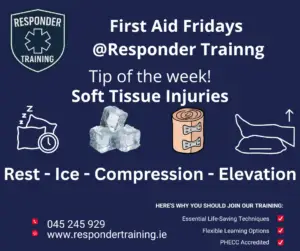
First Aid Treatment: The RICE Method
For many minor strains and sprains, the RICE method is a recognised first aid approach that helps reduce pain and swelling.
R – Rest
Stop the activity immediately and rest the injured area. Avoid movements that cause pain or could worsen the injury.
I – Ice
Apply a cold pack or wrapped ice pack to the injured area for 15–20 minutes every 2–3 hours during the first 24–48 hours. Never place ice directly on the skin.
C – Compression
Use an elastic bandage or compression wrap to help reduce swelling. Ensure the bandage is firm but not so tight that it restricts circulation.
E – Elevation
Raise the injured limb above the level of the heart whenever possible. Elevation helps reduce swelling and promotes fluid drainage.
When to Seek Medical Attention
While many strains and sprains improve with basic first aid, medical assessment may be required if:
- Severe pain is present
- The person cannot bear weight on the affected limb
- There is significant swelling or deformity
- A fracture is suspected
- Symptoms do not improve after several days
- There is numbness or loss of sensation
Preventing Soft Tissue Injuries
Although not all injuries can be prevented, the risk can be reduced by:
- Warming up before exercise
- Using proper lifting techniques
- Wearing appropriate footwear
- Strengthening muscles and improving flexibility
- Avoiding overtraining and fatigue
Learn Essential First Aid Skills with Responder Training
Understanding how to manage soft tissue injuries is an important part of first aid. At Responder Training, our PHECC-accredited first aid courses provide practical, hands-on training to help you respond effectively to common injuries and emergencies.
Whether you are a workplace first aider, sports coach, parent, or community volunteer, our courses give you the confidence and skills to provide immediate care when it matters most.
Contact Responder Training today to learn more about our First Aid Response, Basic First Aid, and Paediatric First Aid courses.
Be Prepared. Save Lives.